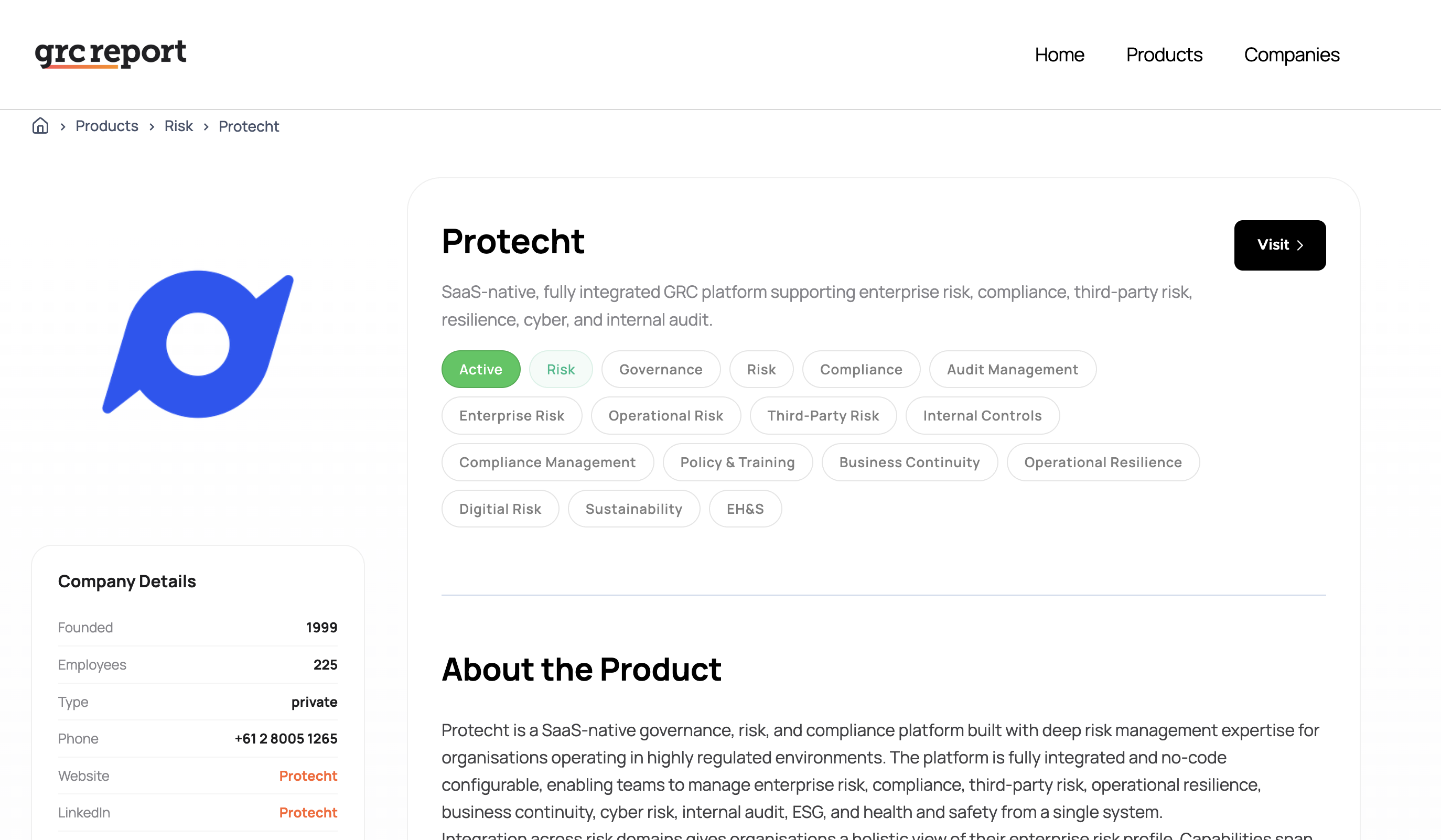
A vendor marketplace with Algolia-powered search and full Stripe payment integration, built for compliance professionals to discover and compare GRC solutions.




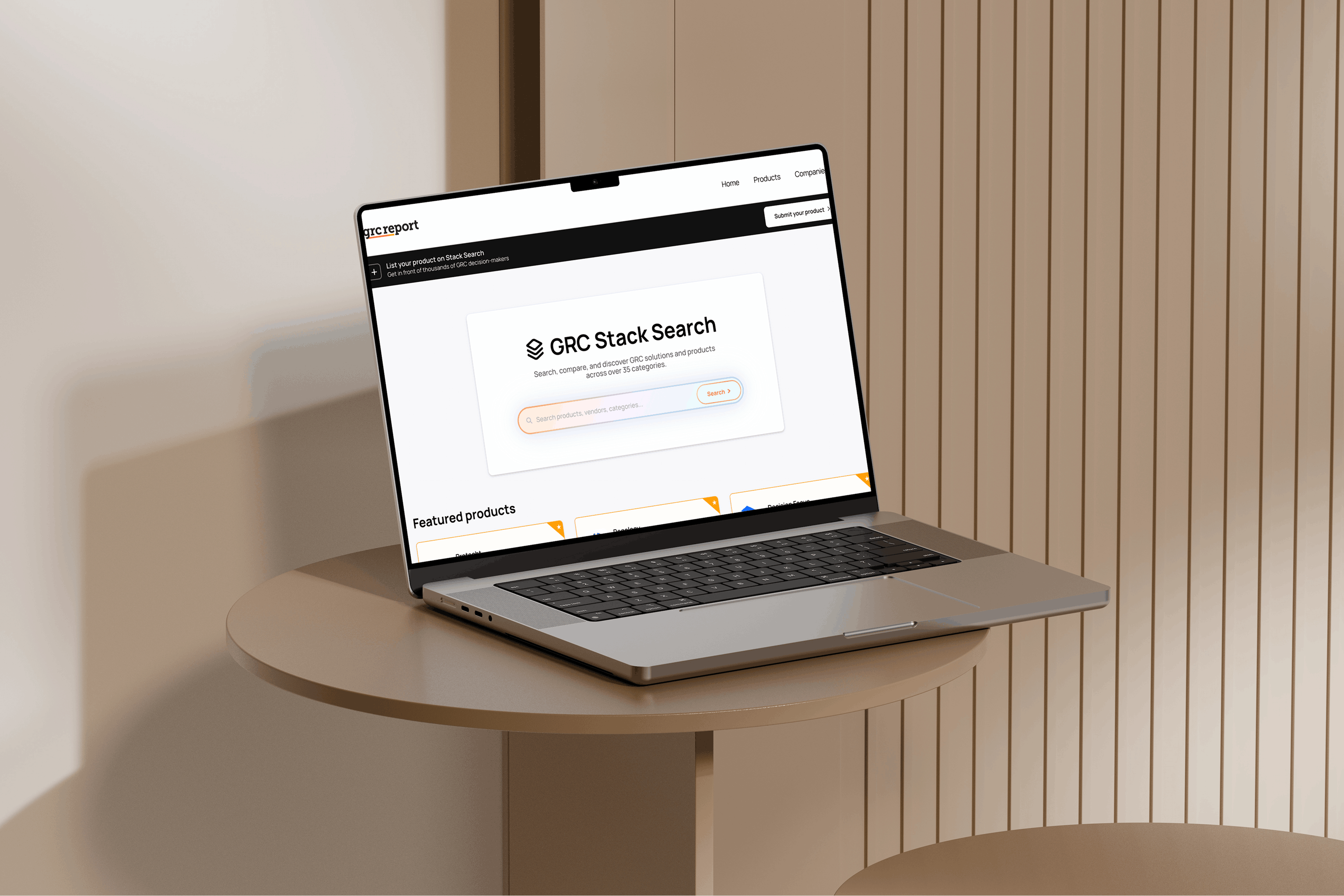
GRC Report is a media platform focused on news, insights, and developments across the Governance, Risk, and Compliance industry. As part of a new platform, the goal was to turn its existing product directory into a more useful and scalable marketplace where compliance professionals could quickly discover relevant GRC solutions — while giving vendors a simple way to submit and promote their own products.
The biggest challenge was making hundreds of products easy to navigate without overwhelming users. At the same time, the platform needed a submission system that could handle both free and paid listings, automate the process for the client, and connect seamlessly with Webflow CMS.
The existing product directory was essentially a static collection of GRC solutions. As the number of products grew, simply browsing through a long list was no longer an effective way for users to find what they were looking for.
The new platform needed to solve several problems at once:
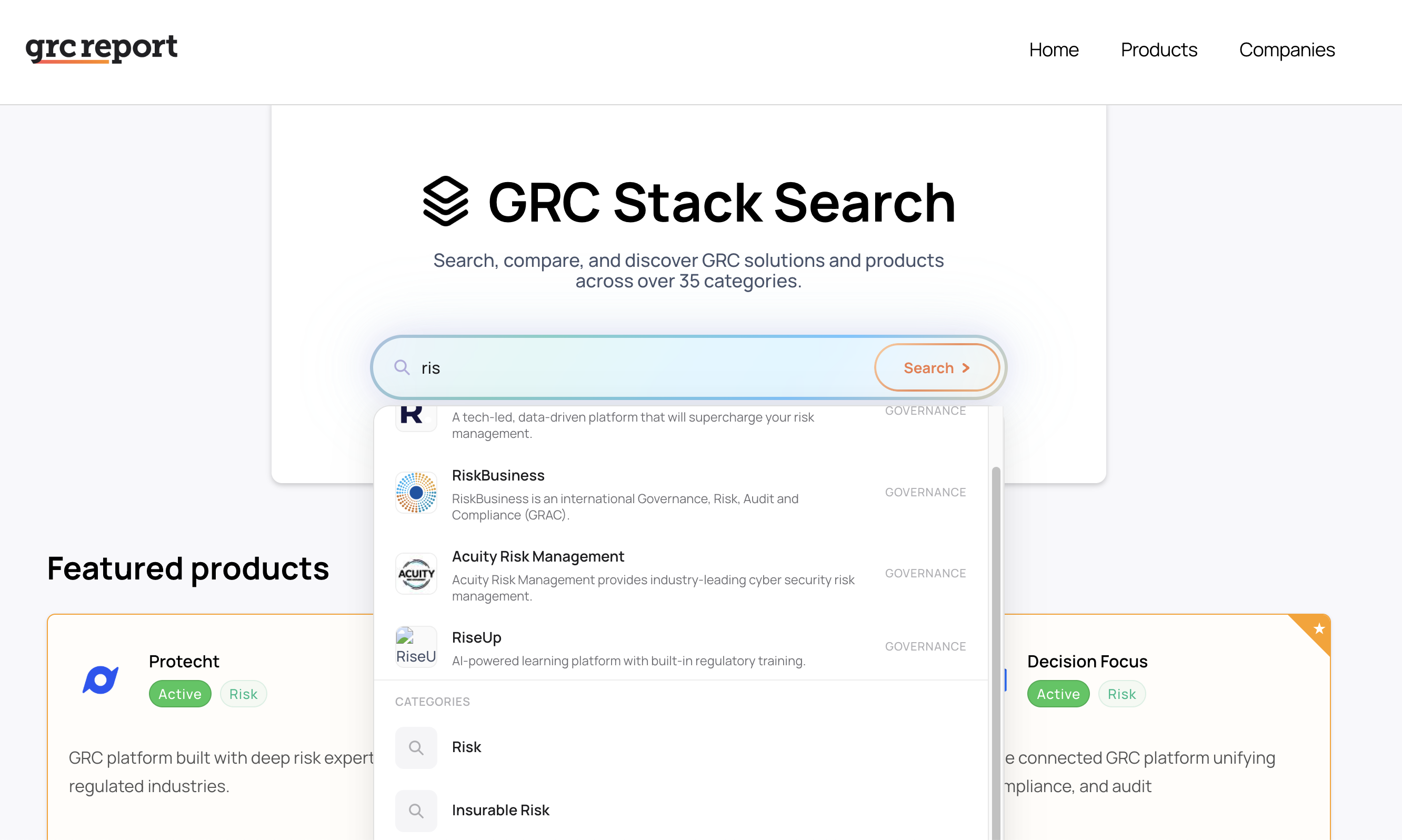
The search experience was especially important. Rather than making users navigate through multiple pages and filters, the goal was to create an experience where they could start typing and immediately find relevant products and categories.
I approached the project as more than just a Webflow directory. The goal was to build a lightweight product marketplace around Webflow, while using external services where they made the experience faster and more scalable.
The core of the platform was built around four key systems:
Webflow CMS for managing products and content
Algolia for fast, intelligent search
Vercel for serverless submission and payment logic
Stripe for paid product submissions
This allowed Webflow to remain the central content management system while more complex functionality was handled through custom development.
Search was the most important part of the new platform.
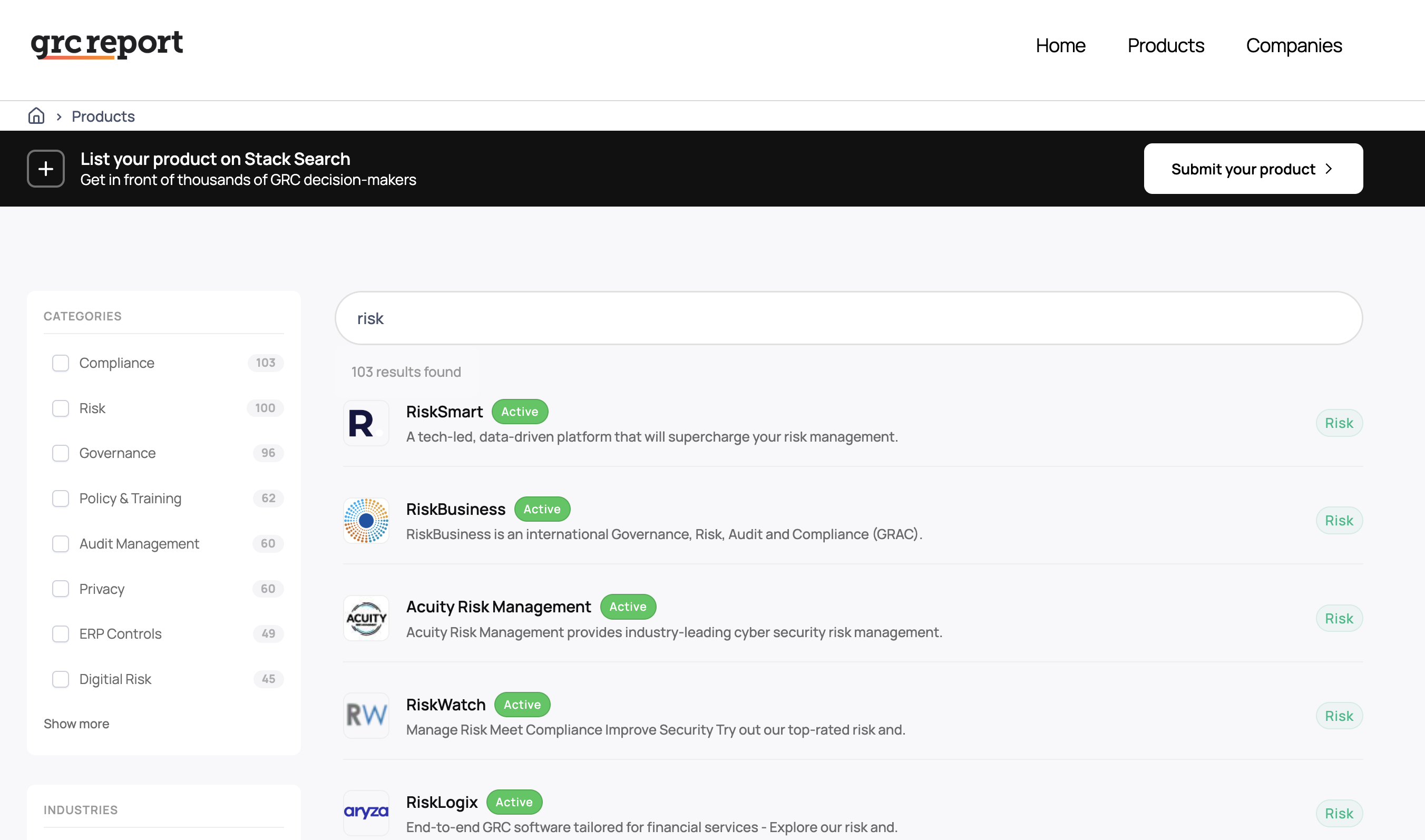
I implemented an Algolia-powered dynamic search that indexes 300+ products and more than 40 tags across three main GRC pillars.
Instead of returning only products, the search experience was designed around discovery. Users can search for a specific solution, browse relevant categories, and find products based on tags and related data.
The result is an instant search experience where results update as the user types, making it significantly easier to navigate a large product database.
Products are also ranked based on their status, with active products appearing first while inactive products remain distinguishable in the interface.
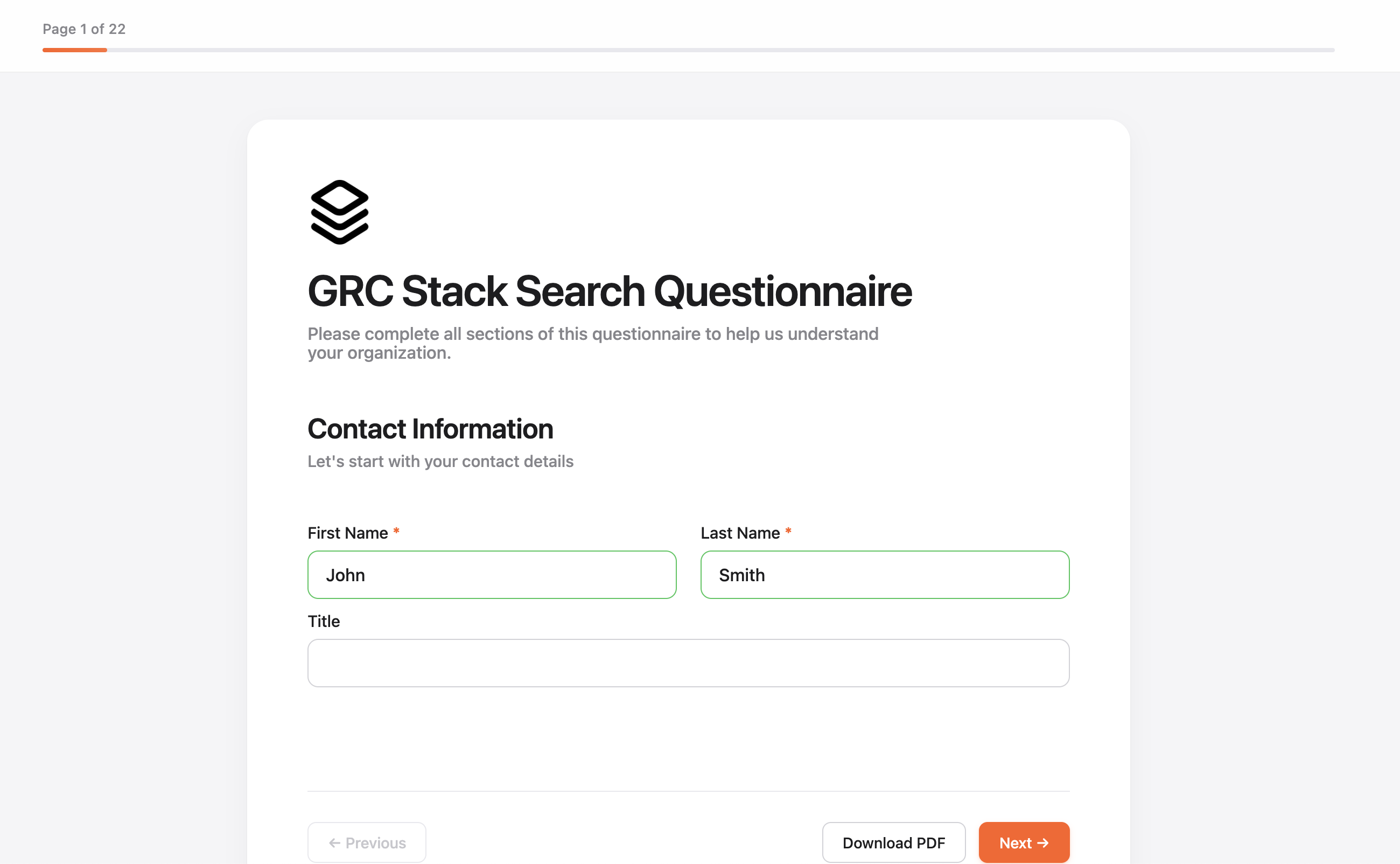
Another major part of the project was allowing vendors to submit their own products directly through the website.
I built a custom submission flow where vendors complete a questionnaire with the information required to create their product listing.
The system supports two submission types:
Free submissions
The vendor completes the questionnaire and submits the product for review.
Paid submissions
The vendor completes the same process, but is redirected to Stripe Checkout to complete payment before the submission is processed.
This meant the client didn’t need to manually collect product information, chase vendors for missing details, or manage payments separately.
Because the submission flow required more logic than Webflow Forms could provide out of the box, I built the backend functionality using Vercel serverless functions.
Once a vendor submits the form, the system processes the submission and determines whether it is free or paid.
For free submissions, the workflow can create the necessary CMS content and notify the GRC Report team.
For paid submissions, the vendor is redirected to Stripe Checkout. Once payment is successfully completed, the system triggers the appropriate confirmation flow and notifies the client.
This keeps the process automated from the moment a vendor submits the questionnaire to the moment the client receives the completed submission.
For paid submissions, I integrated Stripe Checkout into the submission workflow.
The experience was intentionally kept simple for the vendor:
Submit product → Complete payment → Confirmation
After a successful Stripe payment, the submission workflow continues automatically and the client is notified.
This allowed GRC Report to introduce a monetization layer to the directory without requiring a separate vendor portal or complicated payment infrastructure.

One of the important requirements was keeping the different parts of the system synchronized.
Webflow CMS acts as the central source of truth for product data. I used Make to automate the connection between Webflow and Algolia, so when products are created or updated, the search index can be updated without requiring manual intervention.
This created a workflow where the client can manage products through Webflow while users experience the speed of an Algolia-powered search engine.
The submission process also required reliable communication between the platform, vendors, and the GRC Report team.
I integrated Resend into the workflow to handle transactional emails, allowing the system to notify the client when a new submission is received and when a paid submission has successfully completed its payment flow.
This removed another manual step from the process and gave the team immediate visibility into new vendor submissions.

The result was a searchable, scalable product marketplace built around Webflow, rather than a traditional static directory.
Users can quickly search and discover GRC products and categories, while vendors can submit their own solutions through an automated workflow supporting both free and paid listings.
Behind the scenes, Webflow, Algolia, Vercel, Stripe, Resend, and Make work together to create a system that requires significantly less manual management from the GRC Report team.
The project effectively transformed a static product directory into a search-driven, revenue-generating platform with automated vendor onboarding and a foundation that can scale as the marketplace continues to grow.
Webflow - CMS & frontend
Algolia - Search & discovery
Vercel - Serverless backend logic
Stripe - Payments
Resend - Transactional email
Make - Workflow automation
Custom JavaScript - Search interactions & frontend functionality

